
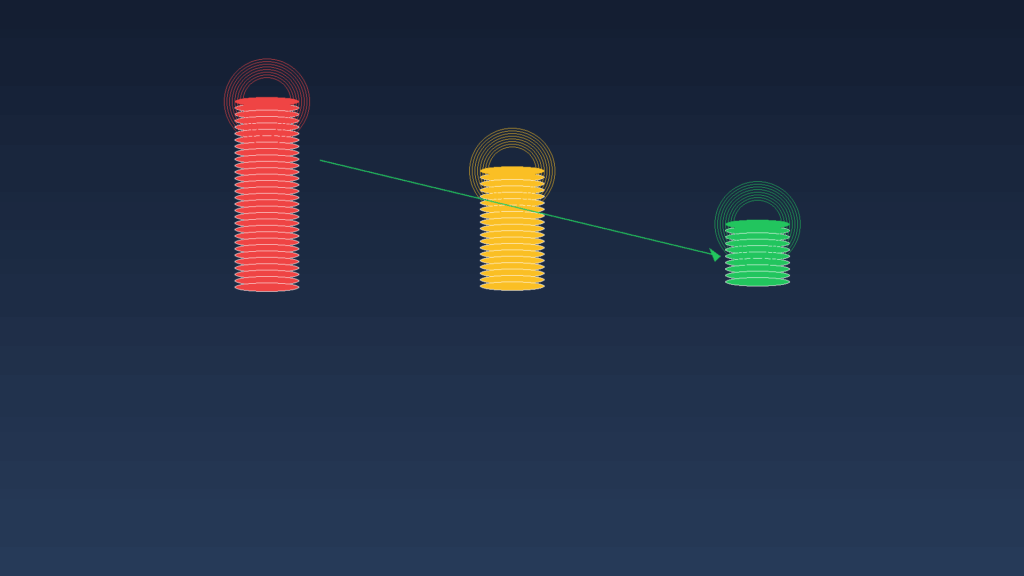
Understanding dental answering service cost is essential before you commit to any solution for handling patient calls. Pricing varies dramatically depending on the type of service, your call volume, and what you actually need the service to do. Some practices spend $200 per month. Others spend $3,000 or more and still do not get the results they expected.
This guide provides a transparent breakdown of dental answering service pricing across every major option available in 2026, including the hidden costs that vendors rarely mention upfront. Whether you run a single-location practice or manage a multi-site DSO, you will find the numbers you need to make a smart investment.
Dental Answering Service Cost by Type: A Complete Comparison
There are four main categories of answering services used in dentistry. Each has a fundamentally different cost structure, and comparing them requires looking beyond the sticker price.
1. Human Answering Services (Per-Minute Billing)
Traditional answering services employ human operators who answer calls on your behalf. They typically work from a script, take messages, and forward urgent calls to an on-call number.
- Typical cost: $0.75 to $1.50 per minute of call time
- Monthly minimum: Most require a minimum of 100-200 minutes ($75-$300 base)
- Realistic monthly spend: $400 to $1,200 for a typical dental practice
- Setup fees: $50 to $200 one-time
- After-hours surcharge: Some charge 20-50% more for evenings and weekends
The per-minute model makes budgeting unpredictable. A busy month can double your bill. Operators also tend to keep callers on the line longer than necessary, since that is how they generate revenue.
2. Dental-Specific Call Centers (Monthly Retainer)
A step up from generic answering services, dental call centers train their agents on dental terminology and some can do basic scheduling through web-based PMS access.
- Typical cost: $800 to $2,000 per month per location
- Included minutes: Usually 500-1,000 minutes; overage charges of $0.80-$1.25/min
- Setup and training: $200 to $500
- Contract terms: Most require 6 to 12 month commitments
- Additional locations: $500 to $1,500 per additional location
These services offer better dental knowledge than generic call centers, but they still cannot match the scheduling accuracy and patient experience of someone sitting at your front desk with full PMS access.
3. AI Dental Answering Services (Flat Monthly Rate)
AI-powered answering services use conversational artificial intelligence to handle patient calls. The best ones integrate directly with your practice management software and can book, reschedule, and confirm appointments autonomously.
- Typical cost: $200 to $500 per month per location
- Call limits: Most offer unlimited calls (no per-minute charges)
- Setup fees: $0 to $200 (many waive setup entirely)
- Contract terms: Month-to-month is common
- Multi-location pricing: Volume discounts typically available for DSOs
Viva AI falls into this category, offering flat-rate pricing with direct integrations into Dentrix Ascend, CareStack, and Cloud9. Because it handles unlimited calls without per-minute billing, your cost stays the same whether you receive 200 or 2,000 calls per month.
4. In-House Receptionist (Salary + Benefits)
For comparison, here is what it costs to handle calls with a dedicated in-house employee.
- Annual salary: $35,000 to $55,000 depending on market
- Benefits and taxes: Add 25-35% ($8,750 to $19,250)
- Total loaded cost: $43,750 to $74,250 per year ($3,646 to $6,187/month)
- Recruitment cost: $3,000 to $7,000 per hire
- Training period: 2 to 4 weeks before full productivity
- Coverage hours: 40 hours per week maximum (no nights, weekends, or holidays)
The in-house option provides the best patient experience when the employee is excellent — but you are paying for 40 hours of coverage, not 168. Every evening, weekend, lunch break, sick day, and vacation creates a gap.
Dental Answering Service Pricing: Side-by-Side Comparison
Here is a direct comparison for a single-location practice handling approximately 800 patient calls per month.
- Human answering service: $600-$1,200/month | Message-taking, basic triage | No PMS integration | Per-minute billing spikes
- Dental call center: $800-$2,000/month | Some scheduling capability | Limited PMS access | Overage charges, long contracts
- AI answering service: $200-$500/month | Full scheduling, confirmations, recalls | Direct PMS integration | Flat rate, no overages
- In-house receptionist: $3,600-$6,200/month | Full capability during work hours | Full PMS access | Benefits, turnover, limited hours
Hidden Costs That Inflate Your Dental Answering Service Cost
The advertised price rarely tells the full story. Watch out for these common additions that can significantly increase your dental answering service cost.
Per-Minute Overage Charges
Services that include a set number of minutes charge steep overage rates. If your plan includes 500 minutes and you use 700, those extra 200 minutes at $1.25 each add $250 to your bill. This is the most common source of billing surprises.
Holiday and After-Hours Surcharges
Some services charge premium rates for holidays, weekends, and evenings. Since these are often the times you need coverage most, the surcharge can add 20-50% to your expected cost during those periods.
Setup, Training, and Script Change Fees
Initial setup fees are standard, but some services also charge every time you update your call script, change your hours, or modify your provider schedule. These fees range from $25 to $100 per change and add up over the course of a year.
Long-Term Contract Penalties
Call centers that require annual contracts typically include early termination fees of $500 to $2,000. If the service does not work out, you are either stuck paying for it or paying to leave.
Integration Costs
Some services charge extra for PMS integration or require you to purchase a third-party connector. Ask specifically whether direct integration with your system is included in the base price.
How to Calculate ROI on a Dental Answering Service
The real question is not what the service costs — it is what it returns. Here is a simple ROI framework.
Step 1: Estimate currently missed calls. If you do not have call tracking, assume 30-35% of total calls go unanswered based on industry averages. For 800 monthly calls, that is approximately 260 missed calls.
Step 2: Estimate new patient calls in the mix. Roughly 25-30% of missed calls are new patient inquiries. That is about 70 potential new patients per month.
Step 3: Apply a conversion rate. A good answering service or AI converts 50-65% of new patient calls into booked appointments. That is 35-45 additional new patients per month.
Step 4: Calculate revenue captured. At an average first-year patient value of $800, those 35-45 new patients represent $28,000 to $36,000 in monthly revenue.
Step 5: Subtract the service cost. Even at $500 per month for an AI service, you are looking at a return of 56x to 72x on your investment. The ROI math is compelling regardless of which service type you choose, but the margin is widest with AI due to the lower monthly cost and ability to handle unlimited volume.
Which Option Makes Sense for Your Practice?
The right choice depends on your situation.
Solo practices with low call volume (under 300 calls/month): A basic human answering service or simple call overflow routing may be sufficient. The cost will stay manageable and you may not need advanced scheduling capabilities.
Growing practices with moderate volume (300-1,000 calls/month): AI answering services offer the best value. You get 24/7 coverage, real-time scheduling, and predictable costs without per-minute surprises. This is where Viva AI delivers the strongest ROI — flat pricing regardless of call volume, with direct PMS integration that actually books appointments instead of just taking messages.
Multi-location DSOs (1,000+ calls/month across locations): AI is typically the only cost-effective option at scale. Running a call center across 5, 10, or 50 locations creates exponential cost growth with human services. AI scales at a fraction of the cost while maintaining consistent quality across every location.
Whatever you choose, make sure you understand the complete cost picture before signing. Ask for a detailed quote that includes all fees, surcharges, and potential overages — not just the base rate.
Want to see exactly how AI answering compares for your specific call volume and practice size? Explore Viva AI’s dental answering service and get a clear picture of what predictable, flat-rate call handling looks like.