Viva AI vs. TrueLark: AI Dental Receptionist Comparison
TrueLark is the other major name in DSO-focused AI. They’ve processed 8M+ conversations. They have patented technology. They’re visible in DSO media and trade shows. When you’re evaluating AI for your DSO, they deserve consideration.
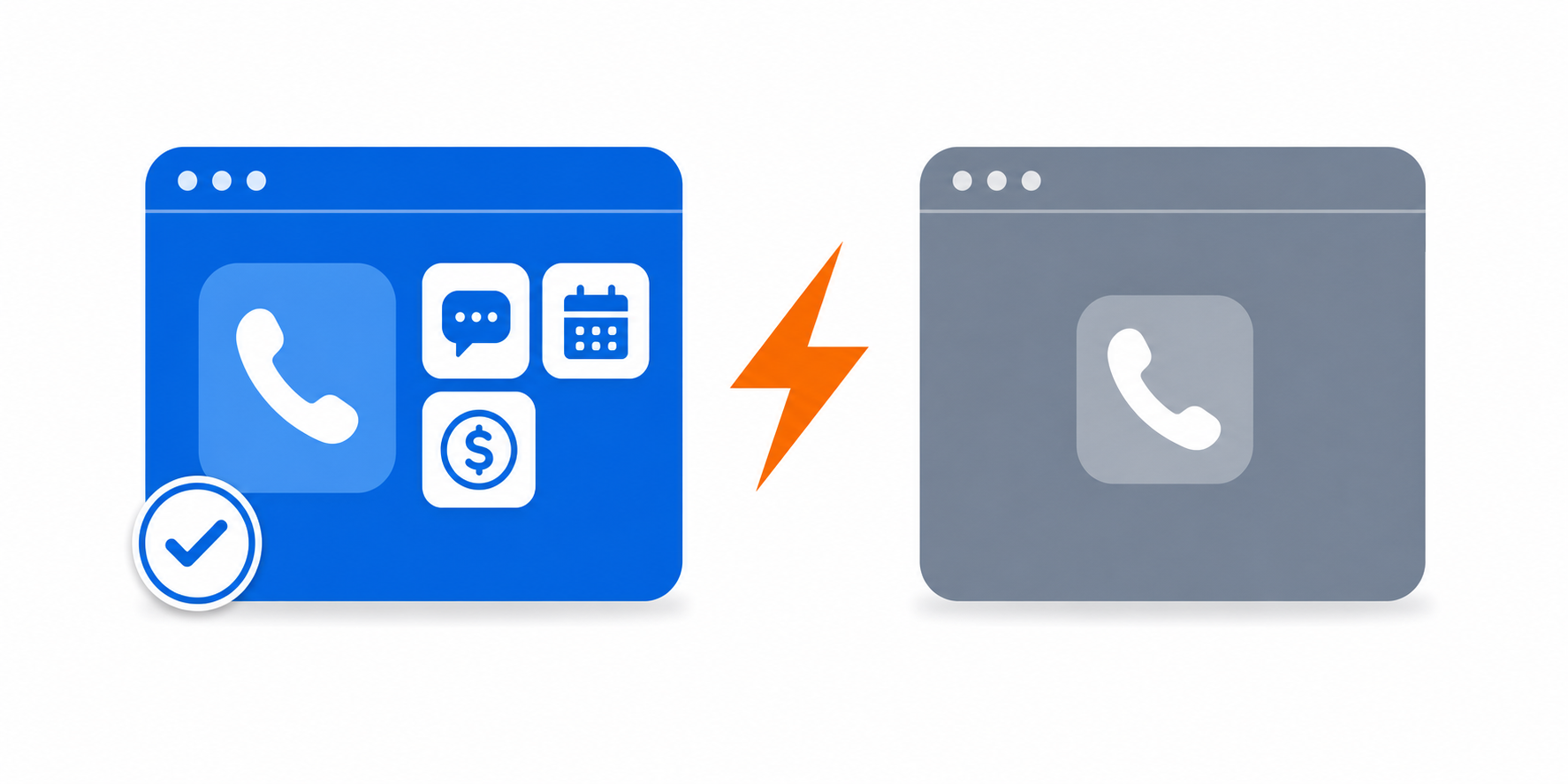
But there’s a fundamental architectural difference between TrueLark and Viva that matters more than media presence or conversation volume. It comes down to this: TrueLark is built to analyze calls you’ve already missed. Viva is built to answer the calls in real time. They’re solving different problems.
Let’s be honest about both approaches, and then tell you where Viva wins for DSO operations.
What TrueLark Does Well
First, the credit: TrueLark has built real scale. 8M+ conversations is serious. They’ve created a moat with their proprietary conversation intelligence engine. DSOs using them for analytics are getting real insights.
Second, their technology is sophisticated. They can listen to calls and extract meaning—understanding what was discussed, whether the call went well, whether opportunities were missed. That’s technically impressive.
Third, they’ve marketed well. They’re in front of DSO executives regularly. They sponsor the right conferences. They have case studies from real DSOs.
But here’s the catch: TrueLark is fundamentally a missed-call platform. A patient calls. Your line is busy, or your staff doesn’t answer quickly enough. TrueLark’s AI kicks in and captures the call via text. They follow up later with context about what the patient wanted.
That’s valuable. But it’s not the same as answering the phone.
The Architectural Difference
TrueLark’s Model: Text-Based Missed Call Follow-Up
Patient calls. Your practice is busy. Instead of a phone ringing forever or going to voicemail, TrueLark’s system sends a text: “Hi, this is TrueLark for Dr. Smith’s office. We missed your call. What can we help with?” Patient texts back. TrueLark (or your staff) handles it. Later, TrueLark analyzes the conversation for insights.
The advantage: you’ve recovered a missed call that otherwise would’ve resulted in a voicemail. You’re converting some of those to booked appointments.
The disadvantage: you’re still losing the real-time conversation. The patient wanted to talk to someone immediately. They settle for texting. That’s a compromise.
Viva’s Model: Real-Time Voice AI
Patient calls. Viva’s AI answers immediately. Full conversation happens in real time. No waiting. No texting back and forth. The AI understands the situation, asks clarifying questions, checks availability, books the appointment or schedules a callback—all in the moment. Our emotional intelligence layer recognizes the patient’s emotional context so the interaction feels human and supportive. Call ends. Patient has been served. No follow-up needed.
The advantage: instantaneous resolution. The patient’s experience is better. The efficiency is higher. You’re capturing real-time booking opportunities, not recovering lost calls days later.
The disadvantage: requires more sophisticated AI (which is why we built it the way we did).
Key Differences Broken Down
| Capability | Viva AI | TrueLark |
|---|---|---|
| Real-Time Inbound Voice Calls | ✓ Full handling | Text follow-up only |
| Immediate Booking / Scheduling | ✓ In real-time call | Later, via text |
| Outbound AI Voice Calls | ✓ Yes (recalls, follow-up) | ✗ No |
| Text/SMS Response | ✓ Yes | ✓ Yes (core feature) |
| Conversation Intelligence / Analytics | ✓ Yes | ✓ Specialized strength |
| Emotional Intelligence | ✓ Yes | ✗ No |
| Payment Collection | ✓ Yes | ✗ No |
| Digital Forms & Intake | ✓ Yes | ✗ No |
| Omnichannel (voice + text + email + chat) | ✓ Yes | Text-focused |
| Languages Supported | ✓ 100+ | Limited |
| Published Pricing | ✓ Yes | Annual contracts, custom quotes |
| Security | ✓ SOC 2 Type II + HIPAA | HIPAA |
Diving Into the Major Differences
Real-Time Voice vs. Asynchronous Text Recovery
This is the core decision. Let’s think about it from a patient experience perspective:
With TrueLark: A patient calls at 2:47pm. Your line is busy. TrueLark texts them. They might respond in 5 minutes, or they might respond at 5pm when they’re done with their meeting. Your staff texts back. It takes 3-4 exchanges to establish that they want a cleaning on Thursday at 3pm, and that’s available. By then, 30 minutes have passed. The patient is annoyed. They might have called a competitor instead.
With Viva: Same patient calls at 2:47pm. Viva answers immediately. “Hi, thanks for calling. How can I help?” Patient: “I need to book a cleaning.” Viva: “Great, which provider do you prefer?” Patient: “Dr. Smith.” Viva: “Dr. Smith has Thursday at 3pm available. Does that work?” Patient: “Yes.” Viva: “Perfect, we’ve got you down. See you Thursday at 3pm. Have a great day.” Call ends. 45 seconds. Patient is delighted. Appointment is booked. Done.
One is real-time problem-solving. One is asynchronous recovery. Both capture some appointments, but they’re fundamentally different patient experiences.
Scale of Coverage
TrueLark works for missed calls—calls that would otherwise go unanswered. That’s a certain percentage of inbound volume. Let’s say 30% of your calls go unanswered on a typical day (your staff is busy, on lunch, etc.). TrueLark recovers some of those.
Viva answers all calls (or all calls during business hours). It’s not recovery; it’s primary handling. Different scale of impact.
For a 20-location DSO receiving 8,000 inbound calls per month: if 30% would be missed, that’s 2,400 calls. TrueLark might recover 40% of those (960 calls). If Viva converts 75% of all calls to bookings, that’s 6,000 bookings from 8,000 calls—fundamentally different scale.
No Outbound Calling
TrueLark doesn’t make calls. Viva’s outbound calling capability enables recall campaigns, confirmation calls, and follow-ups—systematically and at scale.
Viva does outbound. Call patients 24 hours before their appointment to confirm. “Just confirming your cleaning tomorrow at 2pm. Please text or call back to confirm.” 40% respond. 35% confirm. You’ve eliminated 5-7% of no-shows for that location. Scale that across 20 locations and you’re recovering thousands of dollars monthly in appointment value.
No Payment Collection or Intake Forms
TrueLark handles the text conversation. They don’t collect payments or push digital forms. That means your staff is still doing intake manually or you need separate payment infrastructure.
Viva handles the entire workflow: books appointment, pushes digital intake form, collects copay or outstanding balance, confirms insurance—all integrated, all during or immediately after the call.
Analytics: Deep vs. Actionable
TrueLark is genuinely strong at analytics. They can tell you: “In this call, the patient expressed frustration 3 times. The staff member de-escalated twice but failed once. The patient was likely to leave a negative review.” That’s sophisticated conversation intelligence.
Viva also does analytics, but our emphasis is different. We analyze calls to understand what actions to take. Did the AI book the appointment? Good. Did the patient sound happy? Great. Did they have an insurance question we couldn’t answer? Flag it for follow-up. Our analytics serve action, not just insight.
The real question is: do you want to understand past conversations better, or do you want to handle future conversations better? TrueLark excels at the former. Viva excels at the latter.
When TrueLark Makes Sense
TrueLark is a good fit if:
— You have inbound volume that’s currently getting missed and you want to recover those calls via text.
— You want deeper conversation intelligence and analytics but aren’t ready to hand off the entire call-answering function to AI.
— You want to layer analytics on top of your existing human-answered calls.
But if your goal is to improve answering rate, reduce staff burden, boost booking conversion, and handle patient communication across all channels, TrueLark isn’t built for that. They’re built for something different.
The Total Cost Picture
TrueLark operates on annual contracts with custom pricing. You won’t know what you’re paying until you talk to sales. Based on DSO feedback we hear, they’re not inexpensive.
Viva publishes pricing. You can see exactly what you’ll pay based on practice size and call volume. No guessing. No sales negotiation games.
The Strategic Question
Here’s the real question for DSO executives: do you want to be better at recovering lost opportunities, or do you want to eliminate the lost opportunities in the first place?
TrueLark helps you recover. Viva helps you prevent the loss.
Both are valuable. But they’re solving different problems.
What We’ll Say About TrueLark
Their technology is real. Their scale is impressive. Their insights are useful. If you’re considering them, they deserve serious evaluation.
But they’re not Viva. We’re not competing for the same thing. They’re a missed-call text platform. We’re a real-time voice AI platform that also handles text, email, and chat. Different products. Different outcomes. For a broader perspective on how different categories of AI systems fit into the market, see our market map.
One Final Thought for DSO Operators
If you ask TrueLark: “What percentage of inbound calls do you handle?” the answer is: “The ones that are missed.” If you ask Viva the same question, the answer is: “All of them, during business hours.”
That’s the difference.
Stop recovering missed calls. Start answering all of them with real-time AI.