
Viva AI vs. Peerlogic: Analytics-First or Platform-First for Your DSO?
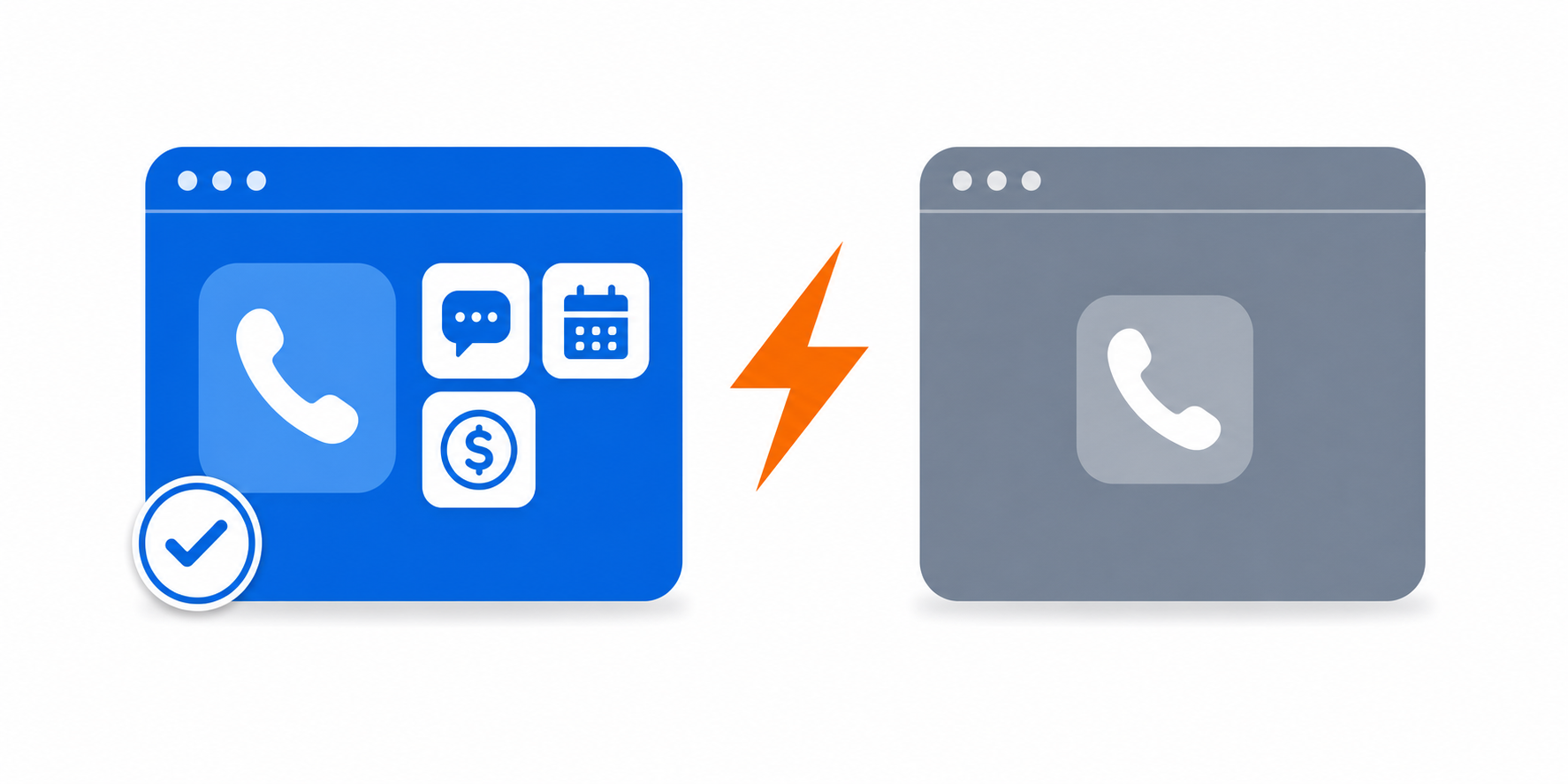
Peerlogic is smart. They’ve built genuinely sophisticated conversation intelligence. When you want to understand what’s happening in calls—where your team is excelling, where they’re struggling, what patterns emerge across conversations—Peerlogic delivers real insights.
But there’s a critical difference between “understanding calls better” and “handling calls better.” Peerlogic is built to make you smarter about conversations you’re already having. Viva is built to handle conversations more effectively from the start.
Let’s be specific about what that difference means for a DSO.
What Peerlogic Does Well
First, they’ve thought deeply about conversation quality. Their system listens to calls and identifies what makes a good interaction: did the staff ask discovery questions? Did they build rapport? Did they overcome objections? That’s useful pattern recognition.
Second, their analytics interface is well-designed. Executives can see trends: “Our team books at 72% when they ask about budget up front, but only 54% when they don’t.” That insight enables coaching and improvement.
Third, they understand DSO operations. They’re not selling to solo practices; they’re selling to groups. Their product reflects that understanding.
Fourth, they’ve recently released Aimee, their voice AI agent. It’s a legitimate product that handles inbound calls. They’re expanding beyond analytics into handling.
All credible. The question is: where does Peerlogic excel, and where does Viva win?
The Fundamental Difference in Architecture
Peerlogic: Analytics-First
Peerlogic’s core thesis is: great conversations create better outcomes. Their product listens to calls and teaches you how to have better conversations. Your staff makes the calls better. Better booking rates follow.
So the flow is: your staff answers the phone → Peerlogic listens → Peerlogic provides feedback → your staff improves → outcomes get better.
It’s a training and accountability tool. It assumes your staff is the core unit of value.
Viva: Platform-First
Viva’s core thesis is: great handling at scale requires AI. Your AI should handle the calls. When humans are needed, they should work with the AI, not instead of it.
So the flow is: patient calls → Viva’s AI answers → AI books appointment, collects info, initiates relationship → if escalation is needed, human takes over with context. Outcomes are better because the AI is faster, more consistent, and never gets tired or frustrated.
It’s an efficiency and capability tool. It puts the AI as the core unit, with humans in supporting roles.
Different philosophies. Different outcomes.
Key Differences Comparison
| Capability | Viva AI | Peerlogic |
|---|---|---|
| Real-Time Inbound Voice Calls | ✓ Full handling | Via Aimee (newer) |
| Conversation Intelligence / Coaching | ✓ Included | ✓ Specialized strength |
| Real-Time Booking & Scheduling | ✓ Via AI | Human-dependent |
| Outbound AI Voice Calls | ✓ Yes (recalls, follow-up) | ✗ No |
| Text/SMS Response | ✓ Yes | ✗ No |
| Email Response | ✓ Yes | ✗ No |
| Omnichannel Support | ✓ Voice + text + email + chat | Voice-focused |
| Payment Collection | ✓ Yes | ✗ No |
| Digital Forms & Intake | ✓ Yes | ✗ No |
| Emotional Intelligence | ✓ Yes | ✗ No |
| Office Optimizer (Query + Action) | ✓ Yes (Office Optimizer) | Query only |
| Languages Supported | ✓ 100+ | Limited |
| Published Pricing | ✓ Yes | Custom quotes |
The Three Critical Differences
1. AI Handling vs. AI Coaching
This is the main axis. Peerlogic’s Aimee AI can answer calls, but Peerlogic’s core product is coaching your staff. They listen to your staff’s conversations and tell them how to be better. That’s valuable. But Viva’s approach automates entire workflows rather than just improving human performance on existing ones.
But here’s the problem: even if your staff is excellent, they’re still human. They handle one call at a time. If 100 calls come in, they can answer 20 (if you’ve got 20 staff members). The other 80 go unanswered or to voicemail. Peerlogic’s coaching makes those 20 calls better, but doesn’t solve the fundamental problem: you don’t have enough staff.
Viva’s AI answers all 100 calls. The calls are handled faster and more consistently than any staff member could. Then, for complex cases, a human takes over—and that human is now working with more context (the AI already asked the discovery questions, already checked availability, already verified insurance). The human is more effective because they’re working with the AI, not replacing it.
2. Handling vs. Understanding
Peerlogic is phenomenal at helping you understand calls. “In this call, the staff member asked about budget 45 seconds in. In calls where that happened, booking rate was 78%. In calls where they asked late or not at all, booking rate was 61%.” That’s real insight.
Viva includes that same analytics, but our primary focus is on handling. Did we book the call? Did the patient feel satisfied? Did we collect the information we needed? The analytics serve action.
The difference: Peerlogic teaches you lessons. Viva learns the lessons and applies them immediately.
If Peerlogic’s analytics show “patients who hear about our emergency services book at 15% higher rates,” you need to coach your staff to mention emergency services more often. Viva’s AI already knows that and mentions it automatically.
3. Office Optimizer: Query vs. Query + Action
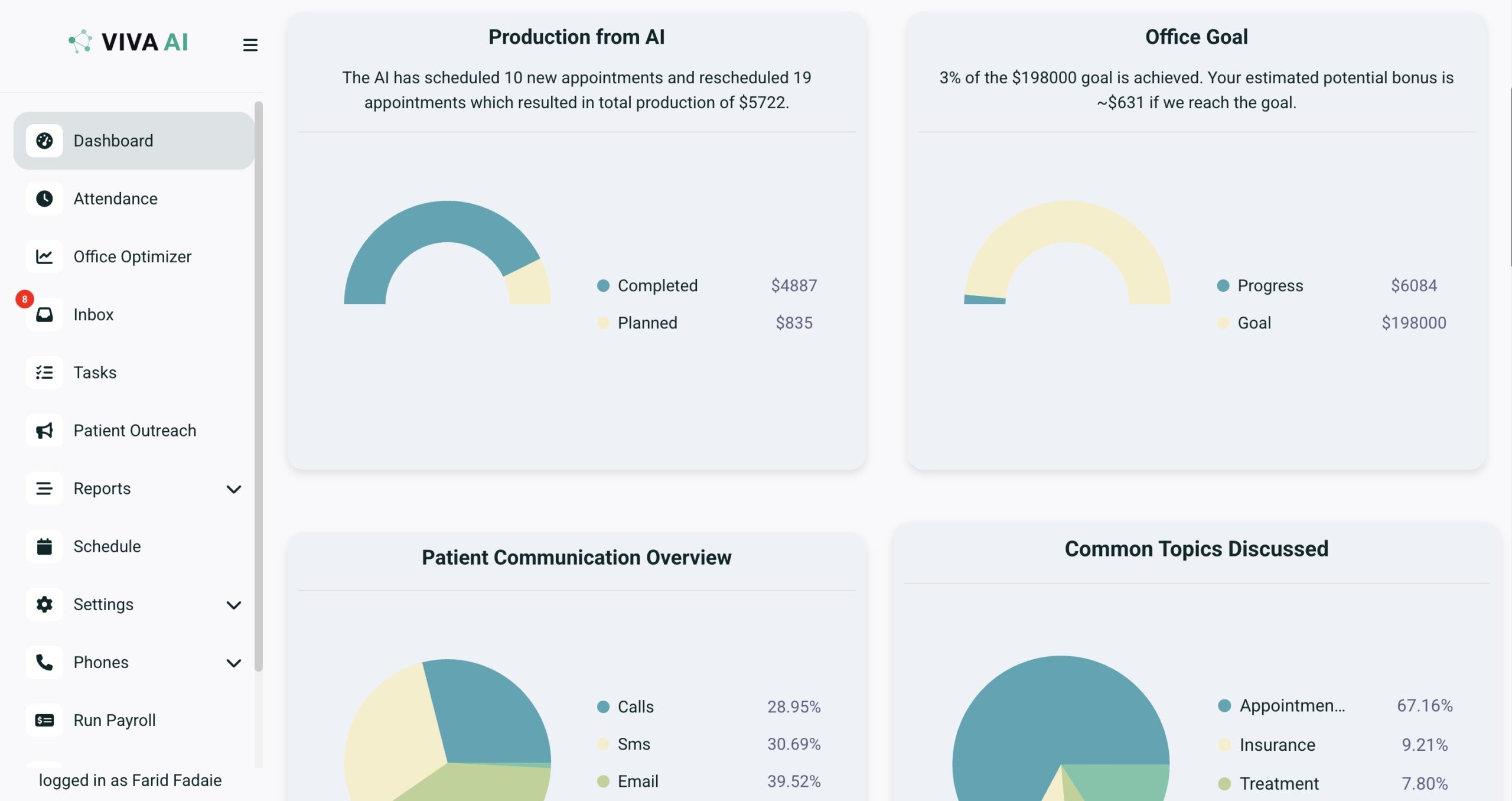
Viva has a feature called Office Optimizer. You can ask it questions: “Which locations have booking rates below 70%?” Office Optimizer finds them. But more importantly, you can ask: “Which patients with overdue balances called last week?” and then say “send them a payment reminder text.” Office Optimizer both queries the data and executes the action.
Peerlogic does the query. They can tell you which calls involved insurance issues. But they won’t automatically send a message to those patients. You need to do that manually or use another system.
Query is less valuable without action. Office Optimizer combines them. And when you scale this across multiple locations with a centralized dashboard, the power compounds.
Where Peerlogic Wins
To be completely fair: if your goal is to make your existing human staff more effective, Peerlogic is excellent. Their coaching insights are real. Their interface is clean. Practicing teams with them do improve.
If you’re running a small group (2-3 locations) and you want to keep your staff as your core unit while making them better, Peerlogic is a solid choice.
And if you want the deepest possible insights into what happened in past conversations, Peerlogic’s analytics engine is sophisticated and useful.
Where Viva Wins
Viva wins if your goal is to improve booking rates and patient satisfaction while reducing staff burden. We win if you want to handle all inbound patient communication (calls, texts, emails, chat) in one platform. We win if you want your staff focused on high-value work instead of answering phones. We win if you want to scale from 3 locations to 20 without hiring more receptionists.
And here’s something specific to DSOs: Viva gives you centralized control. One dashboard across all locations. One platform managing all calls. One set of analytics. Peerlogic, by design, requires you to coach staff at each location. That scales linearly with locations. Viva scales logarithmically.
The Staffing Impact Math
Let’s assume you run 10 locations. Each location has 2 full-time receptionists answering calls. That’s 20 FTE. Annual cost (salary + benefits): roughly $760,000.
With Peerlogic coaching: you make those 2 receptionists at each location better. Maybe booking rate improves by 3-5%. That’s real money, but you still need 20 FTE because you still need someone to answer all those calls.
With Viva AI: the AI answers all incoming calls. You need 1 receptionist per location for high-touch follow-up, scheduling adjustments, and relationship management. That’s 10 FTE instead of 20. You’ve freed up $380,000+ in annual salary costs. Plus you’ve improved booking rate by 15-20% instead of 3-5%.
Different scale of impact.
Peerlogic’s Growth Challenge
Peerlogic launched Aimee, their voice AI, relatively recently. It’s a real product, but it’s newer and less battle-tested than Viva’s AI. If you choose Peerlogic for their analytics strength, you’re betting that Aimee will mature to handle your volume and complexity. That’s a reasonable bet, but it’s still a bet.
Viva’s AI has been handling dental calls at scale for years. We’ve debugged the edge cases. We know how to handle the unusual scenarios. Our product is mature.
When You’d Choose Each
Choose Peerlogic if:
— Your staff is your competitive advantage and you want to make them better.
— You want the deepest possible insights into how conversations are happening at your practices.
— You want to keep humans answering all phones and optimize that experience.
— You’re a smaller group (2-5 locations) and staffing isn’t your bottleneck.
Choose Viva if:
— You want to reduce your receptionist burden while improving booking rates.
— You’re scaling to multiple locations and need a solution that scales efficiently.
— You want to handle all patient communication (calls, texts, emails, chat) in one platform.
— You want real-time handling, not just analytics about past calls.
— You want centralized control across multiple practices.
The Bottom Line for DSO Operators
Peerlogic makes your staff better at the job they’re already doing. Viva changes what job they’re doing. Both are valuable. But they’re fundamentally different approaches.
If you ask “How do I make my receptionists more effective?”, Peerlogic answers that question. If you ask “How do I handle all my inbound patient communication more efficiently?”, Viva answers that question.
For most DSOs scaling beyond 3-5 locations, the second question becomes more pressing. That’s where Viva’s platform approach wins.
What We’ll Say About Peerlogic
They’ve built something real. Their conversation intelligence is genuinely useful. DSOs using them for staff coaching are seeing results. If you choose them, you’re not making a bad decision.
But we’ve made a different choice about what matters. We believe that modern patient communication requires AI handling, not just staff coaching. And we’ve built our entire platform around that belief. For a comprehensive framework on evaluating and comparing different approaches, see our expanded buyer’s guide.
Don’t coach your way to better calls. Handle calls better with AI.