
Viva AI vs. Arini: AI Dental Receptionist Comparison
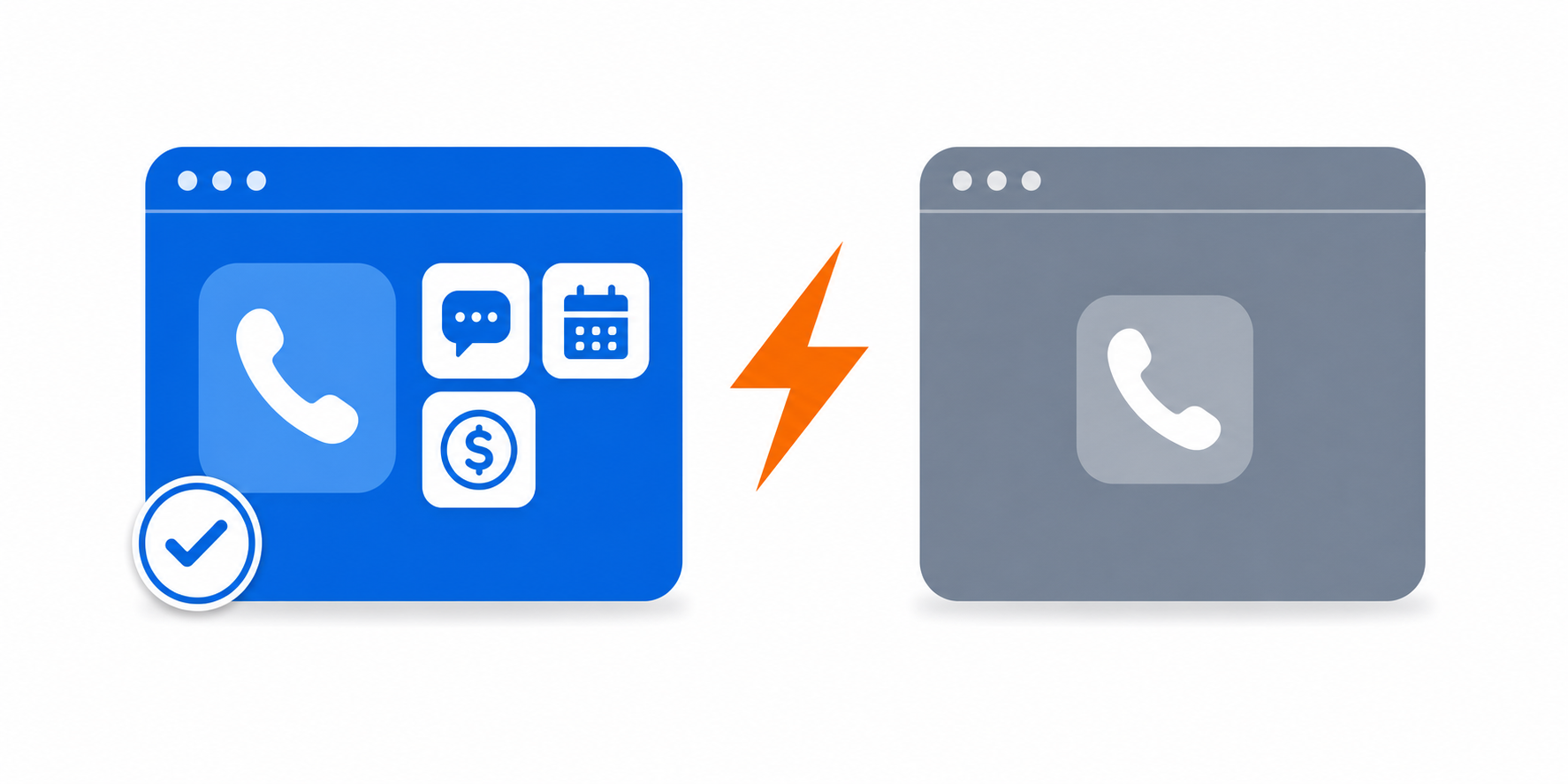
When you’re evaluating AI receptionists for your DSO, Arini is likely on your shortlist. They’ve invested heavily in DSO marketing, they’ve been in the space longer than we have, and they’ve built real credibility with dental groups. Fair enough—they deserve to be in the conversation.
But there’s a critical difference between “looks good in a demo” and “works across your entire network.” We built Viva to handle the complexity that large DSOs actually face. Arini was built differently. Let’s compare them honestly.
Why Arini Gets DSO Attention
Before we dive into differences, let’s acknowledge where Arini gets it right:
First, their marketing speaks directly to DSO operators. Their case studies feature multi-location groups. They understand the pain of managing multiple practices.
Second, they’ve built intelligent call routing. Their AI can intelligently route certain types of calls—understanding the difference between an emergency and a routine question, for example. That’s smart design.
Third, they’re established. They’ve been running for several years, they have real production data, and they have existing DSO customers. There’s lower perceived risk in choosing them.
But here’s what their demo doesn’t show you: what happens when you actually deploy at scale, what limitations emerge when you need more than inbound voice, and what you end up paying when pricing isn’t public.
The Seven Key Differences That Matter
| Feature / Capability | Viva AI | Arini |
|---|---|---|
| Voice AI Inbound Calls | ✓ Full omnichannel | ✓ Voice-only |
| Text/SMS Response | ✓ Yes | ✗ No |
| Webchat Integration | ✓ Yes | ✗ No |
| Email Response AI | ✓ Yes | ✗ No |
| Outbound AI Voice Calls | ✓ Yes (recall, follow-up) | ✗ No |
| Languages Supported | ✓ 100+ | Limited (10-15) |
| Payment Collection | ✓ Yes | ✗ No |
| Digital Forms & Intake | ✓ Yes | ✗ No |
| Call Analytics Dashboard | ✓ Comprehensive | Limited |
| Emotional Intelligence | ✓ Yes | ✗ No |
| Phone Service (VOIP) | ✓ Yes | ✗ No (bring your own) |
| Security / Compliance | ✓ SOC 2 Type II + HIPAA | HIPAA only |
| Published Pricing | ✓ Yes | Custom quotes |
Let’s Dig Into Each Difference
1. Voice-Only vs. Omnichannel
Arini is a voice-first solution. Patients call. The AI answers. That’s the core product. It works fine for inbound calls.
But here’s what your patients actually need: they want to reach you by phone, text, email, and chat. Some patients prefer calling—they’re hearing-sensitive or they need immediate conversation. Others prefer texting—they’re at work and don’t want to be overheard. Some will send an email because they have a complex question and want a written record.
Viva handles all of it. One patient texts a question about pricing. The AI responds. Another patient calls with an emergency. The AI answers and routes appropriately. A third patient emails before 9am, before you open. The AI has already drafted a response. Your team reviews and sends in the morning.
Arini doesn’t touch any of those. You’re still using a receptionist or an assistant for texts, emails, and chat. Viva unifies the whole experience.
2. No Outbound Voice Capability
Here’s where Arini has a strategic gap: they don’t make outbound calls. Viva’s outbound AI transforms recall and reactivation campaigns.
What does that mean for your DSO? Patient no-show rates. Industry standard is 15-20%. A 20-location DSO booking 400 appointments per month per location books 8,000 appointments. If 16% don’t show, that’s 1,280 no-shows. At $350 average value, that’s $448,000 in lost revenue per month.
With Viva, you can deploy automated recall calls 24 hours before appointments. “Hi this is Dr. Smith’s office. Just confirming your cleaning appointment with us tomorrow at 2pm. Please text or call back to confirm.” Response rates: 35-45%. You recover 20-30% of would-be no-shows. That’s $90,000+ per month for that 20-location DSO.
Arini doesn’t do this. You need a separate vendor for outbound calls, or you need a human making reminder calls. Viva is integrated.
3. Language Support: 100+ vs. Limited
Viva supports 100+ languages natively. That matters if you’re operating in diverse markets. A DSO in South Florida handles Spanish, Creole, and Portuguese. A DSO in Southern California handles Spanish, Mandarin, Vietnamese. Viva’s AI speaks 100+ languages with zero configuration and automatic detection.
Arini supports limited languages. If your patient demographic is diverse, that’s a real limitation. You end up needing staff interpreters or scheduling longer appointment times to manage language barriers.
4. Payment Collection: Arini Has None
Viva’s AI can collect copays, balances, and payments during calls. Patient calls to book. AI asks if they have an outstanding balance. Patient agrees to pay $150 copay. AI processes it. Problem solved. Patient shows up. No surprise for your staff about payment status.
Arini doesn’t touch payments. If you want to collect balances over the phone, your staff does it. That’s 5-10 minutes per call where a human is tied up doing something an AI could handle.
For a 20-location DSO: 1,000 inbound calls per week. Even if 20% involve payment questions, that’s 200 calls where your staff is spending time. At $28/hour (average receptionist wage), that’s $5,600 per week of staff time Viva frees up but Arini doesn’t.
5. Digital Forms and New Patient Intake
Viva’s AI can push digital intake forms to patients immediately after booking. Before they even hang up, they’ve got a link to complete their health history, insurance info, and preferences. They fill it out when convenient. Your staff imports it directly into your PMS. Zero data entry.
Arini doesn’t have this. Your staff is still collecting information the old way: forms at the desk, manual entry, delays.
6. Emotional Intelligence
This is subtle but crucial. Viva’s AI is trained to recognize emotional tone in conversations. If a patient sounds frustrated, the AI de-escalates. If a patient is anxious about a procedure, the AI acknowledges it. If a patient is delighted about a result, the AI reinforces the positive experience. Learn more about how emotional intelligence changes patient communication.
Arini’s AI is intelligent about routing and scheduling, but not about emotional context. It sounds more mechanical. A patient calls nervous about a root canal. Arini books them. Viva books them and says, “I know root canals can feel intimidating. Dr. Johnson is excellent with anxious patients, and we’ll make sure you’re comfortable.” Different outcomes.
7. Transparency and Total Cost
Viva publishes pricing on our website. You know what you’re paying. Custom plans exist, but base pricing is transparent.
Arini requires a custom quote. You talk to a sales rep. They price based on your network size, call volume, and specific needs. Very little visibility until you’re deep in the conversation. That’s a red flag from a DSO purchasing perspective—it usually means pricing is higher than you’d expect if you knew it upfront.
Where Arini Does Excel
To be fair, Arini has built some genuinely good things:
Their call routing intelligence is sophisticated. They understand the difference between routine and urgent calls better than many competitors. If you have a simple use case—inbound voice calls only, no other integrations needed—their focused approach works fine.
Their DSO case studies are real. They’ve deployed at 10+ DSOs with scale. They know how to manage that complexity operationally.
But “works fine” and “works great” are different. Viva is built to work great across the complexity DSOs actually face.
The Real Question: What Do You Actually Need?
If your DSO needs:
— Voice-only inbound AI with good routing, Arini is a solid option. They do it well.
— Comprehensive patient communication (voice, text, email, chat), Viva is the clear choice. Arini can’t do it.
— Outbound calling for recalls, confirmations, or follow-ups, you need Viva. Arini doesn’t have it.
— Multi-language support across diverse patient demographics, Viva wins decisively.
— Integration with your entire patient workflow (intake forms, payment collection, appointment booking, follow-up), Viva is designed for it. Arini leaves gaps.
— Transparency on pricing before you talk to sales, Viva publishes it. Arini doesn’t.
What We Won’t Say
We could say Arini’s technology is bad. We won’t. It’s not. It’s focused. It’s designed for voice calls, and it does those well.
We could say their DSO credibility is undeserved. We won’t. They’ve earned it by shipping a product that works and supporting customers who deploy it.
But we can say: if you’re building a modern patient communication platform that handles the way patients actually interact with dental practices today, voice-only isn’t enough. Viva was built as an operating system from the start, not as a phone service. That’s a different architecture and a different set of outcomes.
One More Thing: The Price Question
You’ll eventually ask Arini for pricing. When you do, you’ll likely find it’s higher than Viva. That’s typical for hidden-pricing models. They set price based on what they think you’ll pay, not based on value delivered.
Viva pricing is public. We price based on practice size and call volume, knowing you can compare to alternatives. That discipline keeps us honest.
Bottom Line for DSO Operators
Arini is a credible option if your needs are simple and focused on voice. If your DSO is more complex—multiple channels, diverse patient base, needs for outbound calling and payments—Viva is built for you.
We’ve spent years listening to DSO operators about what they actually need. This product is the result. For a more comprehensive framework on comparing different AI platforms and approaches, see our expanded buyer’s guide.
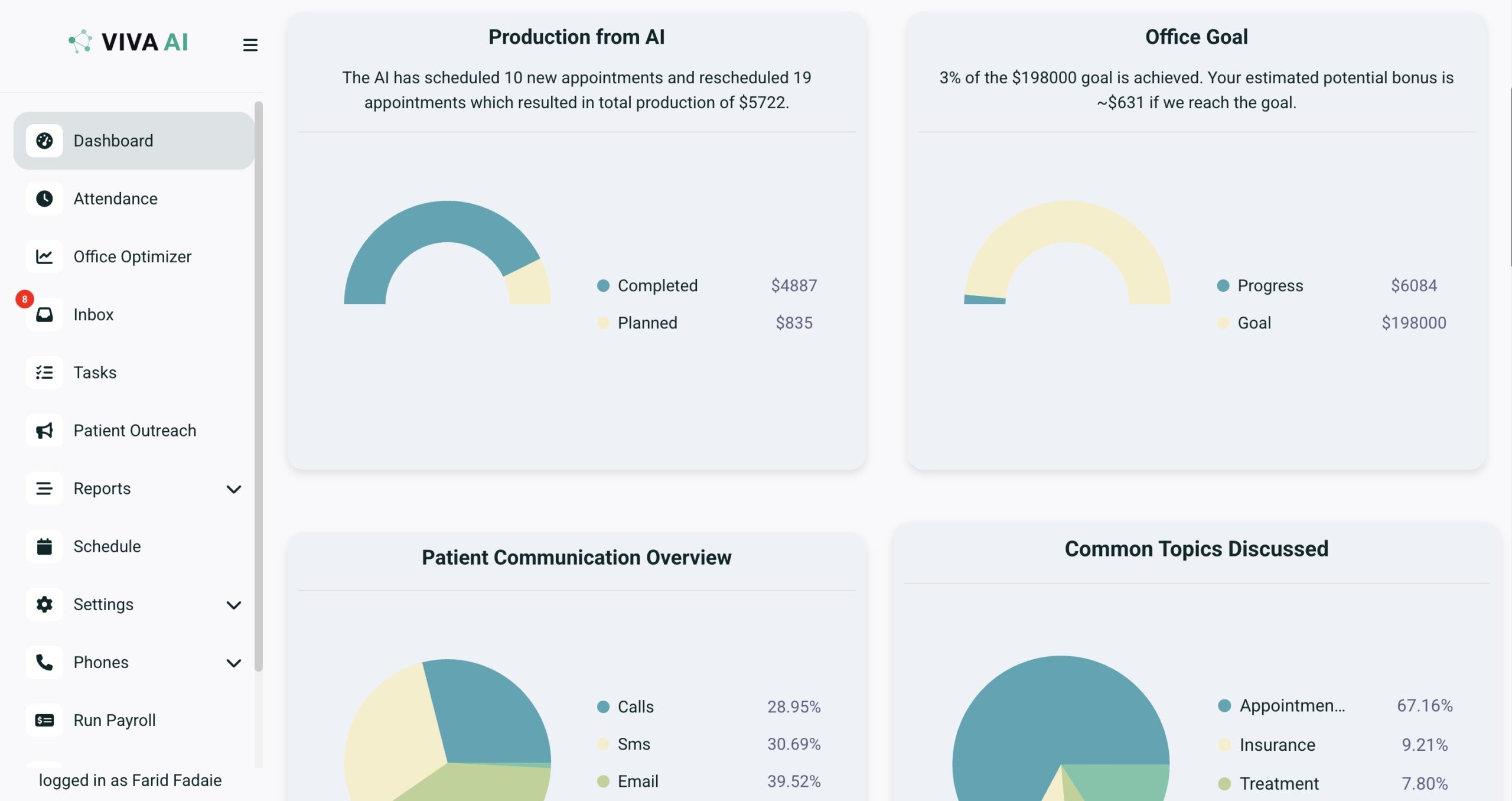
See the full feature set Viva brings to your DSO. See transparent pricing. No custom quotes. No sales calls required.